TeknoFuel UK energy innovation, decoded.

TeknoFuel

UK energy innovation, decoded.

Latest Articles

Sound Judgement: Assembling an Acoustic Case File for UK Hydrogen Refuelling Depots
Fleet Strategy

Sound Judgement: Assembling an Acoustic Case File for UK Hydrogen Refuelling Depots

Planning committees are increasingly treating noise as a material issue for hydrogen and battery-electric depots, especially where sites sit near housing or retail parks. A credible acoustic case file in 2026 should link baseline survey, equipment tonality, night-time purge cycles and delivery scheduling to a monitoring routine that can survive scrutiny. This is less a public-relations exercise than an operational governance task.


The Handover Hour: Where Liability Changes Hands on a Hired Hydrogen Refueller
Fleet Strategy

The Handover Hour: Where Liability Changes Hands on a Hired Hydrogen Refueller

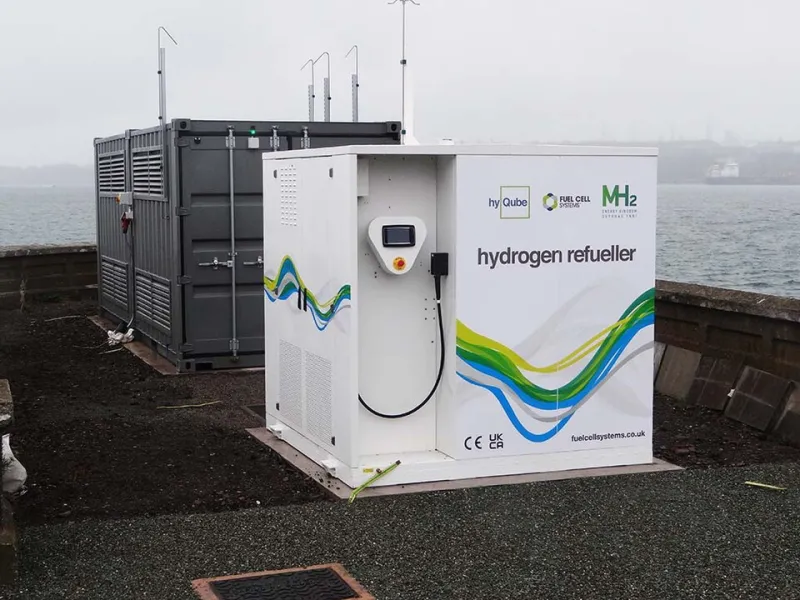
A mobile hydrogen refueller can bridge the gap before permanent infrastructure arrives, but the hire agreement does not transfer every duty to the supplier. UK site managers need a handover file that records permissions, separation, fuel quality, competence and emergency arrangements before the unit is connected.

What Leaves with the Keys: The Residual-Value Blind Spot in Britain’s Hydrogen HGV Market
Fleet Strategy

What Leaves with the Keys: The Residual-Value Blind Spot in Britain’s Hydrogen HGV Market

The first UK hydrogen HGVs are edging towards replacement age, and the arithmetic of disposal is proving harder than the arithmetic of acquisition. This article sets out the four questions a second-hand buyer will ask — tank recertification, stack condition, warranty transfer and documented duty cycle — and argues that residual-value clarity has become a practical barrier to adoption rather than a footnote to it.

The Export Ledger: What a UK Truck Depot Must Prove Before Selling Power Back
Fleet Strategy

The Export Ledger: What a UK Truck Depot Must Prove Before Selling Power Back

Vehicle-to-grid can look like free revenue for a UK electric truck depot, but the credible figure depends on export capacity, settlement-grade metering, battery warranty terms and the fleet's own duty cycle. This article sets out the evidence a depot should assemble before signing an export contract.

What's Really in the Drum? Building a Paper Trail for UK HVO Feedstock
Fleet Strategy

What's Really in the Drum? Building a Paper Trail for UK HVO Feedstock

For UK fleets, the credibility of every HVO litre rests on evidence gathered long before the tanker arrives. This piece sets out how fuel buyers can build a defensible feedstock audit trail — the documents, laboratory checks and contract terms that shift the burden of proof back onto the supplier.

A Quiet Fuel Needs Loud Evidence: Detection Coverage at UK Hydrogen Refuelling Sites
Fleet Strategy

A Quiet Fuel Needs Loud Evidence: Detection Coverage at UK Hydrogen Refuelling Sites

Hydrogen gives no warning by smell, and the odorants used in natural gas can poison fuel cells. For UK refuelling-site managers, leak detection is therefore a primary safeguard that must be specified, maintained and evidenced with the same discipline as any other safety-critical system.

Fleet Strategy

Frost Lines in the Fine Print: Cold-Flow Assurance for UK HVO Supply

HVO can reduce carbon across UK fleets, but cold-flow behaviour varies with feedstock and blend. This Fleet Strategy guide explains how buyers can specify cloud point and CFPP tolerances, verify supplier declarations and protect depot storage through a UK cold snap.

The Rota Is the Tariff: Retraining UK Depot Teams for Half-Hourly Power
Fleet Strategy

The Rota Is the Tariff: Retraining UK Depot Teams for Half-Hourly Power

Half-hourly settlement has turned charging timing into a line item that shift planners, not just energy managers, now control. For many UK depots the constraint on cheaper power is not the charger or the software but whether the evening plug-in happens at 17:40 or 21:10. This article examines the routines, rotas and labour questions that decide whether a time-of-use tariff delivers.

Standing By, Counting Carbon: Sizing Backup Power for UK Electric Truck Depots
Fleet Strategy

Standing By, Counting Carbon: Sizing Backup Power for UK Electric Truck Depots

Standby generation is usually treated as an electrical design question, settled by the consulting engineer and filed away. In an electrified depot it is also an emissions question, and one that rarely appears in the carbon report until an auditor asks. This article sets out how to size backup power for truck charging, weigh diesel against HVO and battery-backed options, and account for the fuel burned in anger and in testing.

The Gram Beyond the Pipe: Tyre Wear in UK Electric Fleet Accounts
Fleet Strategy

The Gram Beyond the Pipe: Tyre Wear in UK Electric Fleet Accounts

Electrification moves some emissions from the exhaust to the tyre and road surface, yet many UK depot reports still leave that mass unrecorded. This analysis sets out how battery weight, torque delivery and regenerative braking alter tyre wear in 2026, and how procurement can compare electric, HVO and hydrogen fleets on a like-for-like basis.

Evidence Before Cover: What UK Hydrogen Depots Must Prove to Insurers
Fleet Strategy

Evidence Before Cover: What UK Hydrogen Depots Must Prove to Insurers

As UK hydrogen depots move from trial status into commercial operation, underwriters are no longer satisfied with design intent alone. This article sets out the evidence insurers expect on leak detection, emergency response, maintenance and staff competence, and how operators can build it into pre-commissioning rather than assemble it at renewal.

Fleet Strategy

The Gas That Never Reaches the Nozzle: Contracting for Biomethane Losses in UK Fleets

Biomethane certificates can make a fleet’s fuel claim look straightforward, but the gas lost between digester and dispenser rarely appears in the contract. This article sets out the measurement, liability and carbon-accounting clauses UK depot managers should settle before the next tender.

Before the First Purge: A Nitrogen Readiness Plan for UK Hydrogen Sites
Fleet Strategy

Before the First Purge: A Nitrogen Readiness Plan for UK Hydrogen Sites

UK hydrogen projects routinely budget for stacks, compressors and grid capacity, then meet nitrogen late in commissioning. This pre-commissioning plan sets out where nitrogen is consumed, how demand peaks, and how bulk liquid, cylinder packs and on-site generation compare for British sites.

Fleet Strategy

The Custody Kilogram: Metering Assurance for UK Hydrogen Fuel Contracts

As UK hydrogen fleets move from trials into contracted supply in 2026, the kilogram becomes a commercial unit, not merely an engineering output. This guide examines the metering and calibration questions that depot teams should settle in supply agreements before throughput scales.

Beyond the IP Rating: Corrosion Planning for UK Port Power Infrastructure
Fleet Strategy

Beyond the IP Rating: Corrosion Planning for UK Port Power Infrastructure

A charger cabinet bound for a Midlands depot and one bound for a quayside berth can carry an identical datasheet, yet only one is likely to reach a decade of service without intervention. This analysis sets out how UK port operators should translate salt-laden air, tidal spray and persistent humidity into specification choices, inspection regimes and realistic warranty terms before the order is placed.

Past the Warranty Line: The Second-Life Ledger for UK Electric Truck Packs
Fleet Strategy

Past the Warranty Line: The Second-Life Ledger for UK Electric Truck Packs

The first large electric truck traction packs are approaching the end of their warranty cover, and many UK depots have no line in the fleet model for what happens next. The real bill is not replacement alone: it is the contractual, safety, insurance and residual-value cost of the handover.

The Intake Before the Stack: Water Risk in UK Green Hydrogen Siting
Fleet Strategy

The Intake Before the Stack: Water Risk in UK Green Hydrogen Siting

UK green hydrogen projects are usually assessed on grid connections, offtake and subsidy, while the feedwater chain remains a footnote. For fleet depots and industrial sites in 2026, water quality, abstraction licensing and discharge consent can shape siting, operating cost and local acceptance. This analysis sets out the questions operators should answer before an electrolyser is ordered.

The Fixed-Route Advantage: Electrifying UK Yard Moves Before the Open Road
Fleet Strategy

The Fixed-Route Advantage: Electrifying UK Yard Moves Before the Open Road

Yard tractors offer predictable duty cycles and return-to-base charging, making them a practical proving ground for UK depot electrification before road-going fleets. This assessment sets out charger sizing, grid constraints, maintenance and training checks for operators weighing the first step.

The Air the Stack Breathes: Contaminant Budgeting for UK Urban Hydrogen Fleets
Fleet Strategy

The Air the Stack Breathes: Contaminant Budgeting for UK Urban Hydrogen Fleets

Hydrogen buses and trucks in UK cities draw cathode air that is often far dirtier than test-bench assumptions. This analysis sets out the contaminant, filtration and service-interval choices that should be priced into depot budgets before urban hydrogen routes are locked in.

When the Substation Slips: A Site Manager’s Guide to Methanol Fuel-Cell Cabinets
Fleet Strategy

When the Substation Slips: A Site Manager’s Guide to Methanol Fuel-Cell Cabinets

Grid connections for UK construction sites continue to slip, leaving diesel generators to fill the gap. This article sets out a practical procurement test for methanol fuel-cell cabinets against HVO gensets and battery hybrids, covering fuel handling, HSE duties, refuelling, emissions evidence and whole-life cost.