The Intake Before the Stack: Water Risk in UK Green Hydrogen Siting
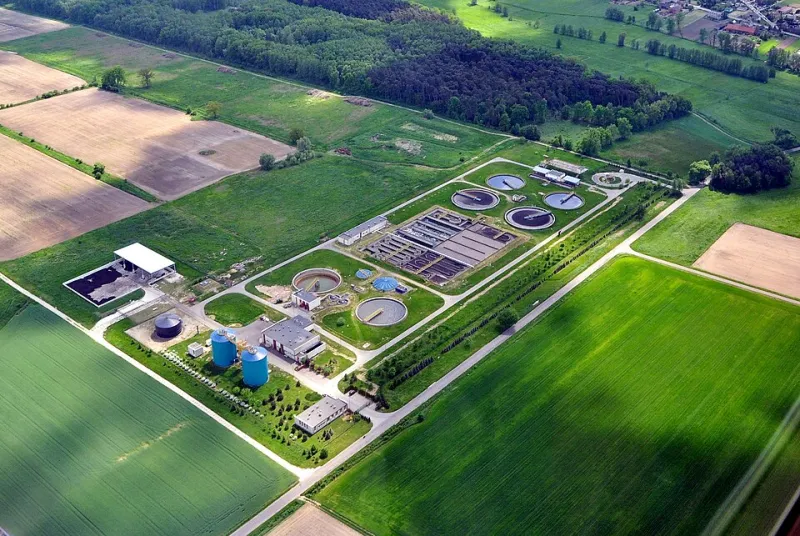
Photo: Stiopa, CC BY-SA 3.0, via Wikimedia Commons
Green hydrogen projects in the UK are usually discussed through three lenses: electricity connection, offtake certainty and public subsidy. Water sits outside that frame. It arrives on the project risk register as a line item for the utility engineer, if it arrives at all. That is a mistake. For a fleet depot or industrial site considering on-site electrolysis in 2026, feedwater is not a background utility. It is a permitting question, a capital cost, an operating constraint and, in some catchments, a reputational issue that can delay a scheme more effectively than a grid offer.
A licence before a litre
Unlike electricity, water cannot simply be ordered in larger quantities and assumed to arrive. Large abstractions in England require a licence from the Environment Agency; in Scotland, SEPA is the regulator; in Wales, Natural Resources Wales; in Northern Ireland, the Northern Ireland Environment Agency. The licence sets a volume, a purpose and often conditions linked to river flow, groundwater levels or seasonal availability. A project that assumes a nearby river or borehole will supply the plant without a licence is not ready for financial close.
Mains water is not automatically unconstrained either. A large electrolyser can add a significant new demand to a local network. The water company may have capacity, but it may also require reinforcement, a new connection or a commercial agreement that reflects peak demand. In water-stressed areas, the local resource management plan matters. A depot that shares a supply main with an industrial estate may find that the cheapest connection is not the one with the most headroom.
The stoichiometric requirement for water electrolysis is often quoted as about nine litres per kilogram of hydrogen. Practical demand is higher once reverse-osmosis reject, electrodeionisation, blowdown and cleaning are counted. That gap between theory and plant reality is where project budgets tend to slip.
What the stack will actually accept
Electrolyser manufacturers specify feedwater quality for a reason. Conductivity, silica, hardness, chloride, total organic carbon and dissolved oxygen can all affect stack life, efficiency and warranty. A specification written for a laboratory may not survive a 1 MW plant operating on a UK industrial estate with variable raw water. The treatment train usually involves softening, reverse osmosis, electrodeionisation and polishing. Each stage has a duty, a reject stream and a maintenance burden.
Operators should ask whether the proposed treatment train has been designed around a specific water analysis, not a generic assumption. Seasonal variation matters. A borehole that meets the specification in winter may carry different silica or hardness loads in summer. A mains supply that is stable most of the year can change after a network incident. The electrolyser may tolerate brief excursions, but the warranty may not.
The treatment train and its bills
Water treatment is an energy load in its own right. Pumps, dosing systems and controls add to the site's auxiliary demand. Membranes and resins are consumables, not fixtures. Chemicals for cleaning and regeneration require storage, handling and competent staff. The treatment plant also needs space, which is often scarce on urban fleet depots.
There is a fleet strategy point here. A depot that plans for hydrogen production should plan for a water treatment room, a reject-water route and a maintenance access regime. If those elements are added after the building layout is fixed, the cost is not merely financial. It is operational disruption. The same applies to metering and monitoring: without reliable data on water use and quality, the operator cannot prove compliance or diagnose stack problems.
Discharge is the other half of the permit
Every treatment train produces a stream that must go somewhere. Reverse-osmosis concentrate, regeneration wastewater and cleaning fluids cannot be discharged without the correct route. In England, discharge to a sewer may require a trade effluent agreement with the sewerage undertaker; discharge to a watercourse requires an environmental permit. Limits may apply to volume, pH, temperature, conductivity, suspended solids and specific substances.
Discharge to sewer is not a default right. A sewerage undertaker can refuse or condition a trade effluent consent if the receiving treatment works cannot handle the load. Surface water discharge can be equally constrained. Zero liquid discharge is technically possible, but it carries high capital and energy costs and should not be treated as a fallback without a serious engineering assessment.
This is also where community consent enters the conversation. Local residents and businesses may accept a hydrogen project in principle while objecting to visible plumes, HGV movements or a perceived strain on local water resources. A project that can explain its water balance, its discharge controls and its drought contingency is in a stronger position than one that cannot.
A siting question, not an afterthought
For fleet operators, the practical implication is that water should be part of site selection, not part of detailed design. An urban depot with limited space, a small incoming main and no obvious discharge route may be a poor candidate for on-site electrolysis, even if the grid connection is attractive. A site in an industrial cluster with existing water infrastructure and a permitted discharge route may be stronger, provided the abstraction or supply agreement can be secured.
In 2026, the UK's hydrogen support mechanisms continue to reward projects that can demonstrate deliverability. Water is part of deliverability. A scheme that cannot show a lawful water source, a specified treatment train, a consented discharge route and a credible drought plan is carrying a risk that no offtake agreement can fully offset.
The evidence pack for a water-ready project
Before committing to on-site hydrogen production, operators should assemble a water evidence pack. It should include a site water balance covering peak and average demand; the status of any abstraction licence or mains supply agreement; a raw water analysis with seasonal variation; the electrolyser manufacturer's feedwater specification; the proposed treatment train and its reject streams; the discharge route and consent status; a drought and restriction contingency plan; and a record of engagement with the relevant regulator, water company and local stakeholders.
None of this replaces the engineering case for hydrogen. It simply places water where it belongs: alongside grid capacity, offtake and safety as a condition of a credible project. The intake comes before the stack. Projects that recognise that early will be better placed to control cost, secure consent and maintain the confidence of the communities in which they operate.