What's Really in the Drum? Building a Paper Trail for UK HVO Feedstock
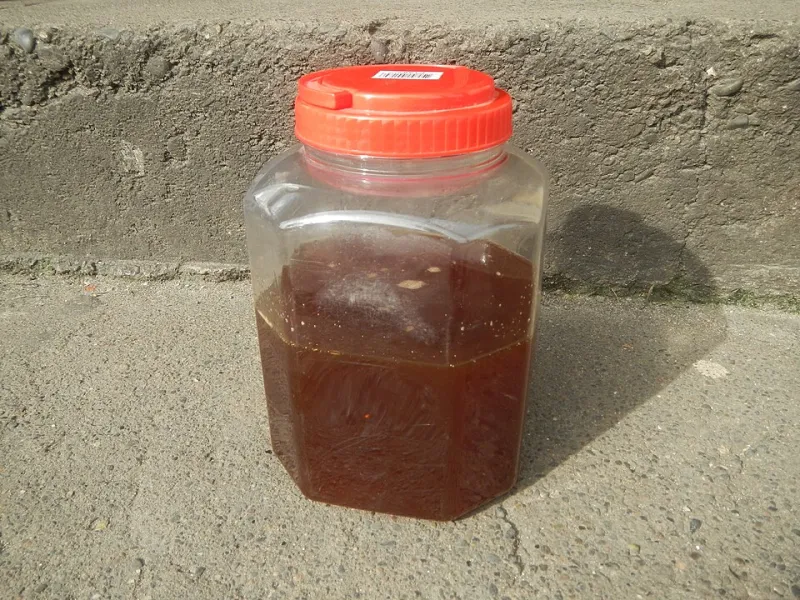
Photo: Judgefloro, CC0, via Wikimedia Commons
Hydrotreated vegetable oil has moved from pilot-project curiosity to a routine line item in many UK depot fuel plans. That shift has happened quickly, and it has happened largely on the strength of a single number: the greenhouse gas saving attached to the litre. Fleets cite it, sustainability teams report it, and procurement teams build business cases around it. The number itself, however, is only as solid as the feedstock behind it — and feedstock is where scrutiny is now concentrating.
The Weak Point Sits Upstream
Depot managers are, by temperament and by job description, downstream people. They care about deliveries arriving on time, tanks staying within specification and drivers getting away from the yard. Asking them to interrogate whether the used cooking oil (UCO) in a consignment was genuinely collected from catering outlets is a stretch of both time and expertise.
That is precisely the argument for treating feedstock assurance as a procurement function rather than an operations one. The evidence should be assembled, checked and filed before a single litre reaches a UK site. If a depot team is being asked to verify the provenance of a fuel load at the point of delivery, the process has already failed.
What the Scheme Documents Actually Tell You
Most UK HVO supply chains operate within voluntary certification schemes recognised under the Renewable Transport Fuel Obligation. These schemes produce a paper trail: sustainability declarations, mass balance records, chain-of-custody certificates and, for waste-derived material, evidence that the feedstock qualifies for the higher savings band.
Buyers should read these documents for what they are — a record of a chain, not a guarantee of a substance. A valid certificate confirms that a supplier has systems in place. It does not confirm that the material in a particular tank on a particular day matches a particular batch of UCO. The gap between the two is where risk lives, and closing it requires batch-level linkage rather than company-level assurance.
Red Flags Worth Recognising
A handful of warning signs recur often enough to be worth naming.
- Chain breaks at collection. Documentation that jumps from a named waste producer straight to a refinery, with no intermediate aggregator, is unusual in a sector built on many small collections. Missing links are not automatically fraudulent, but they deserve explanation.
- Improbable yield. If a supplier's declared UCO volumes exceed what its collection network could plausibly gather, the shortfall has to come from somewhere.
- Opaque admixture. Blends are legitimate, but the composition should be stated plainly and consistently across documents.
- Inconsistencies in date and volume. Small mismatches between declarations and delivery notes are common; systematic ones are not.
- Reluctance on sampling. A supplier unwilling to allow independent testing of retained samples is telling you something.
None of these is proof of wrongdoing. Each is a reason to ask a further question.
Laboratory Checks That Earn Their Place
Testing is not a substitute for documentation, but it is a useful cross-check. A small number of parameters carry most of the diagnostic weight.
Fatty acid methyl ester content is an obvious starting point, since elevated levels can indicate blending or contamination. Carbon-14 testing can distinguish biogenic from fossil carbon, which is helpful when the question is whether a load contains more mineral diesel than declared. Stable isotope analysis and trace-element profiling can, in the right hands, suggest whether a feedstock is consistent with the claimed origin, though interpretation requires genuine expertise and results should be treated as indicative rather than conclusive.
Fleets do not need a laboratory on site. They need a contractual right to commission testing at defined intervals, a clear protocol for who pays when results fall outside agreed tolerances, and a supplier obligation to retain samples for a stated period.
Contract Clauses That Shift the Burden
The most effective feedstock assurance is written into the supply agreement, not bolted on afterwards. Several provisions are worth insisting on.
First, a positive obligation on the supplier to provide batch-level documentation on request within a defined timescale, with the cost of retrieval borne by them. Second, a right of audit extending beyond the immediate supplier to the aggregator and collector levels, exercised on reasonable notice. Third, a sampling and retention clause specifying volumes, storage conditions and duration. Fourth, a notification duty: any change in feedstock source or blend composition must be disclosed before delivery, not discovered afterwards.
Finally, a remedy that has teeth. Where evidence cannot be produced, the commercial consequence should be clear in advance — a reclassification of the load, a price adjustment, or a right to reject. Clauses that end with an obligation to "use reasonable endeavours" rarely survive contact with a busy trading desk.
Keeping the Record Useful
A document that exists but cannot be found is not evidence. Fleets running HVO across several depots should hold feedstock records in a single, searchable location, linked to delivery dates and tank readings. When a customer, an auditor or a board asks how a claimed saving was derived, the answer should be retrievable in minutes rather than reconstructed over weeks.
Reporting obligations are tightening, and the direction of travel across UK fuel policy is toward more granular disclosure rather than less. Fleets that build a defensible feedstock record now will find the next round of requirements considerably less painful than those starting from scratch.
The litre in the tank is a commodity. The evidence behind it is the asset. Treating the two as separate procurement deliverables, with separate owners and separate audit routines, is the practical way to keep an HVO programme credible as volumes grow through 2026 and beyond.