The Handover Hour: Where Liability Changes Hands on a Hired Hydrogen Refueller
Photo: mobile hydrogen refuelling trailer at UK construction site with safety signage, via i.ytimg.com
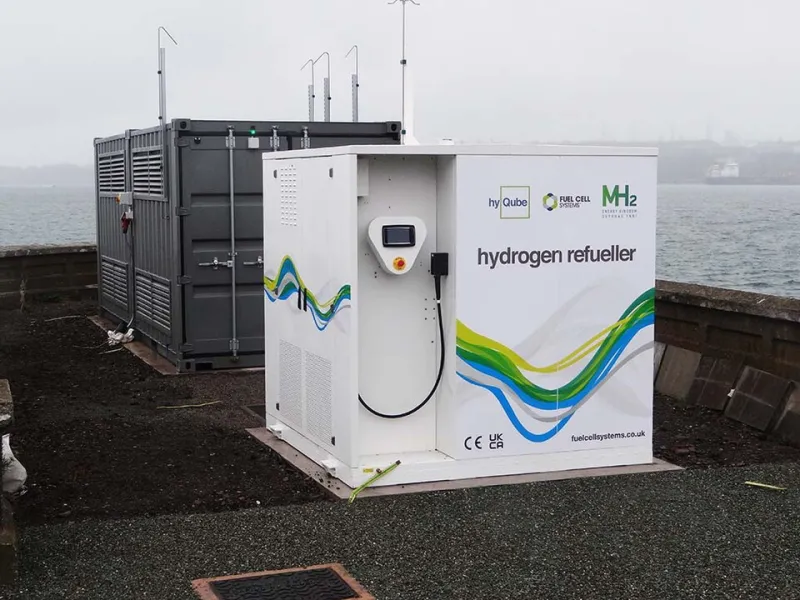
Mobile hydrogen refuelling units are being offered to UK construction sites, event venues and depots that need hydrogen before a permanent station can be consented and connected. The commercial appeal is obvious: a trailer-mounted or skid-mounted refueller arrives, connects and supplies. The operational reality is more layered. Hiring the equipment does not remove the host site from the regulatory picture, and the point at which responsibility shifts is rarely as clean as the delivery note suggests.
For a site manager, the useful question is not simply whether the unit is approved for use. It is which duties remain with the host, which sit with the hire company, and what evidence proves that both parties understood the split. The handover hour — the period between arrival and first use — is where that understanding is either recorded or lost.
Permission comes before the purchase order
A mobile refueller is not a temporary fixture in the way a welfare cabin is. It introduces a hazardous substance and a pressure system to a site that may already have its own risks. Before the unit is ordered, the site should establish whether the local planning authority expects a formal application or whether permitted development rights apply. That answer depends on the duration, the volume stored and the site's existing consents.
Alongside planning, the site's duties under the Dangerous Substances and Explosive Atmospheres Regulations 2002 (DSEAR) need a fresh assessment. A mobile unit can change hazardous area classification, ventilation assumptions and ignition-source controls. If the site already holds a DSEAR assessment, it should be reviewed rather than filed. The local fire and rescue service may also expect consultation, particularly where access for emergency vehicles is constrained.
Pressure systems add another layer. Transportable pressure equipment is subject to its own regime, but once the unit is parked and connected, questions arise about periodic examination, written schemes and the boundary between transport duties and site duties. The hire contract should state clearly who holds those obligations and who produces the examination records on request.
Separation distances are a layout decision
The unit's datasheet may quote separation distances, but the site plan decides whether those distances are achievable. A refueller placed against a hoarding to save yard space can create a cascade of problems: restricted access for the fire service, inadequate dispersion, and a hazardous area that extends into areas where contractors routinely work.
Site managers should ask for a layout drawing that shows the unit in its proposed position, not a generic product image. The drawing should mark access routes, emergency egress, adjacent ignition sources, drains and any occupied buildings. It should also show where vehicles will queue and where the operator will stand during transfer. If the hire company cannot provide a site-specific layout, that is a signal that the separation assessment has not been done.
Weather protection deserves scrutiny too. Temporary enclosures can be useful, but they can also trap hydrogen in the event of a release. Any enclosure should be justified by the risk assessment, not added on site as a housekeeping measure. The same applies to fencing: security is necessary, but it must not obstruct emergency access or ventilation.
The kilogram has to be witnessed
Hydrogen is sold by mass, and mobile refuelling makes custody transfer less familiar than a diesel nozzle. The unit's metering should be traceable, and the handover file should record the meter reading at delivery, the reading at first transfer and the method used to convert pressure and temperature into mass. A printed delivery note is useful; a witnessed reading is better.
Fuel quality is a separate question from quantity. Road-vehicle hydrogen is expected to meet ISO 14687, and a mobile unit should be supported by a certificate of analysis or a batch record that shows the gas has been tested against the relevant limits. Moisture, oxygen and particulates matter because they can affect the fuel cell stack long after the refueller has left site. If the unit has been used elsewhere before arrival, the site should ask what purging and changeover records exist.
The handover should also identify who owns the gas in the unit at any given moment. If the site is billed on consumption, the meter is the commercial instrument. If the hire company retains title to the gas until transfer, the contract should say how losses and residual gas are treated. These are not legal niceties; they determine who pays for a unit that arrives part-full or leaves with unused inventory.
Competence is not a logo
A supplier's safety certificate is not the same as evidence that the person arriving on site has been trained for the unit and the site. Site managers should ask for the names and roles of the operator and any relief staff, the training records that cover the specific equipment, and the arrangements for out-of-hours support. Where the operator will connect or disconnect the unit, the site should confirm that the activity is within the supplier's scope and that the operator has authority to isolate the equipment.
The host site also has duties to communicate its own rules. Induction, permit-to-work arrangements, exclusion zones and emergency contacts should be shared before the operator arrives, not after the first transfer. A short joint walkround at handover is more valuable than a folder of generic method statements.
The emergency plan must be local
A generic emergency response plan for hydrogen is a starting point, not a site plan. The site's arrangements should identify who calls the fire service, which access route will be used, where the assembly point sits relative to the unit, and how the unit can be isolated. If the refueller has a remote shut-off, its location and operation should be demonstrated at handover.
UK fire and rescue services increasingly encounter hydrogen vehicles and equipment, but familiarity varies. A site-specific plan that includes a simple diagram and a named contact is more useful than an assumption that the service will know the layout. The plan should also cover small releases, such as a leaking hose or fitting, and the conditions under which the unit should be shut down rather than investigated.
The file that decides disputes
The handover file should be assembled before the unit is used and updated when it leaves. It should contain the site layout drawing, the DSEAR review, the separation assessment, the supplier's pressure examination records, the operator competence evidence, the fuel quality certificate, the meter readings, the emergency plan and photographs of the installed position. A signed handover sheet with names and times is a modest document with significant value.
When the unit is collected, the same discipline applies. Residual gas, isolation, removal of signage and reinstatement of the area should be recorded. If the site later faces an insurance query or a contractual dispute, the handover file is the difference between a documented decision and an recollection.
Mobile hydrogen can be a sensible bridge for UK sites waiting for permanent infrastructure. It remains a bridge that has to be engineered, permitted and evidenced. The site manager who treats the handover hour as a formal checkpoint is not adding bureaucracy; they are making sure the risk stays where the contract says it should.