Cold Chain, Warm Grid: Trialling Electric Refrigerated Trailers Without Tripping the Depot
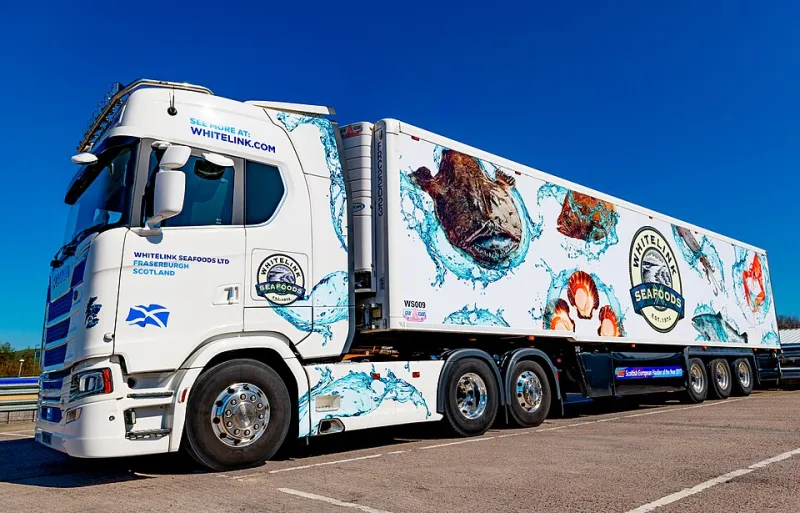
Photo: Rab Lawrence from Aberdeen/Scotland, CC BY 2.0, via Wikimedia Commons
At most UK food distribution sites there is a piece of diesel equipment that appears on nobody's decarbonisation roadmap. It sits on the front of a refrigerated trailer, runs for hours at a time, and burns fuel that never registers on the tractor unit's telematics. Multiply it across a fleet and the transport refrigeration unit becomes one of the last genuinely unexamined sources of scope 1 emissions in the cold chain.
The engine nobody counted
A conventional TRU is usually a small two- or three-cylinder diesel driving a refrigeration compressor. Depending on ambient temperature, door openings and set point, it will drink somewhere between 1.5 and 3.5 litres an hour. A trailer working 2,000 hours a year therefore consumes a five-figure volume of fuel and emits a double-digit tonnage of carbon, quietly, outside the powertrain conversation.
The operational costs are just as awkward. Urban store deliveries frequently run early, and a diesel unit holding a set point on a residential street at six in the morning attracts complaints in a way a tractor engine does not. Some city-centre and supermarket delivery windows now treat noise as a gating criterion rather than a nuisance, which is where electrification starts to look less like a sustainability project and more like access management.
Three technical routes, compared without romance
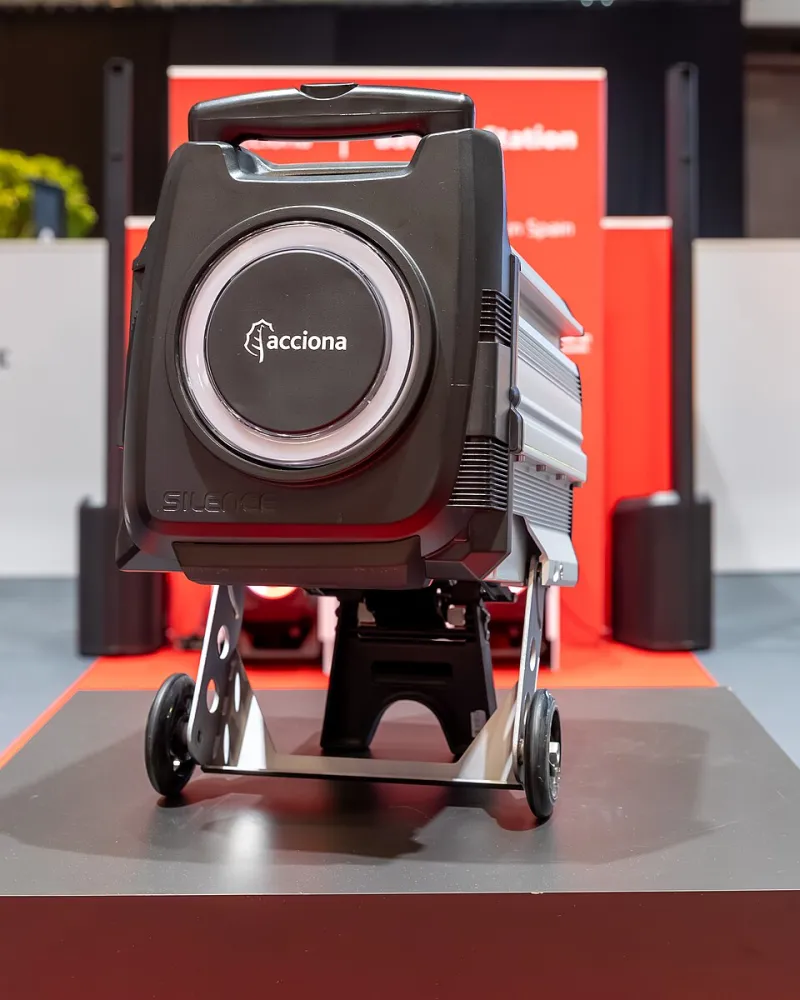
Battery-electric. The engineless or battery-electric trailer is the most mature option. Carrier Transicold's Vector eCool recovers energy through an e-Drive axle and stores it for the refrigeration unit; Thermo King's AxlePower, paired with Schmitz Cargobull's S.KOe, works on a similar principle; Frigoblock and several UK bodybuilders offer comparable packages. On the road there is no tailpipe, noise falls dramatically, and the fuel-card line disappears. On the depot, a new load appears.
Plug-in hybrid. A smaller diesel engine paired with a battery allows a defined electric window, often sufficient for a multi-drop round, with diesel fallback. It is a pragmatic bridge for operators whose routes are not yet predictable enough for all-electric, and it keeps a mechanical safety net. It does not remove the diesel line, it shrinks it.
Hydrogen fuel cell. Fuel-cell TRUs have been demonstrated and continue to attract interest where long duty cycles and limited depot power coincide, but series-production availability in the UK remains thin and the refuelling question is unresolved for most depots. It is worth watching; it is not yet worth a capital plan for a single site.
The power arithmetic before the site survey
Electric TRU consumption is governed by duty cycle, ambient temperature, insulation quality and how often the doors open. For a multi-drop grocery round in a British summer, a working figure of 30 to 90 kilowatt hours per trailer per day is a reasonable planning range, with colder set points and longer door-open times pushing towards the upper end.
That number matters far more in aggregate than per trailer. Twenty-five trailers charging at 20 kilowatts each, arriving back within the same two-hour window, is 500 kilowatts of coincident demand — on a site that may already be running yard lighting, forklift charging and an office block. The question is not whether the depot has a supply; it is whether it has headroom at the precise hour the trailers return.
Mitigations exist and should be designed in from the outset: staggered charge scheduling by route, on-board charger load management, opportunity charging during longer yard dwell, and a conversation with the distribution network operator long before the trailers are ordered. Half-hourly metering and time-of-use tariffs also change the economics, since a trailer that charges overnight at a low unit rate is a very different proposition from one that charges at 17:00.
Cold-chain resilience is the harder problem
A diesel TRU that runs dry can be refuelled from a can. A battery-electric TRU that runs out of charge mid-route risks a load rejection and an insurance event running into five figures. Any trial that does not address this will fail on driver confidence rather than on engineering.
The practical answers are telemetry on state of charge available to both the driver and the transport office, a hard minimum threshold that triggers a return-to-base instruction, driver training that treats the TRU battery as a range constraint rather than a fuel gauge, and a documented fallback — a diesel-equipped spare trailer or a plug-in hybrid unit — for the days when the plan goes wrong.
A trial checklist for UK operators
- Baseline first. Pull twelve months of fuel-card data for TRU-coded transactions, plus engine hour meter readings, before choosing any hardware.
- Pick the route, then the vehicle. A fixed, repeatable multi-drop round is a better first trial than a trunking lane with variable dwell.
- Instrument the trailer. Ambient temperature logging and door-open counting will explain most of the variance in consumption.
- Confirm site capacity early. A load study and a DNO enquiry take months; the trailer order will not wait for them.
- Run the worst week, not the best. Late July and a pre-Christmas peak tell you more than a mild October.
- Agree the failure protocol in writing with operations, the customer and the insurer before the first load moves.
- Capture the quiet wins. Noise complaints, idling at loading bays and driver acceptance are legitimate trial metrics alongside kilowatt hours.
The view from the yard
Electrifying refrigerated trailers is no longer a question of whether the technology works. It is a question of sequencing: matching trailer duty cycles to a site's real power position, and building a fallback that operations will trust on a bad day. Operators who treat the TRU as a footnote to the tractor's transition will find themselves procuring trailers into a depot that cannot charge them — and defending a diesel engine they never counted in the first place.